This month we spoke with two recruiters about the AI-inspired changes they’re seeing in the world of software recruiting and Product Management. Below is their advice and perspective for job-seekers to leaders alike.
--
In Part 1 of this month's roundtable, we speak to Adam Gellert about AI implications on applying and hiring
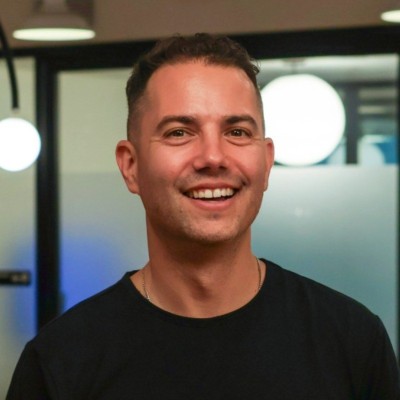
Adam Gellert, Founder and CEO of Linkus Group, has spent more than two decades helping technology companies build high-performing teams. Through his work with founders and executives, he has a front-row view of how AI is reshaping hiring, talent strategy, and the way companies think about building teams.
"Everyone keeps telling me AI is going to fix hiring. I'm seeing the opposite,” Adam says.
"Here's what's actually happening on the ground. AI is adding complexity to a process that was never supposed to be complicated…we keep trying to "fix" something that, at its core, is simple."
"Hiring is about alignment, getting the right people in the right room at the right time, values lined up, working toward the same goal," Adam reminds us.
"Remember, a job is just a business problem that needs solving…There's a problem behind every hire. AI hasn't changed that. It's just added noise on both sides of it."
"Companies are drowning in applications," Adam continued.
“We're more valuable as a recruiting partner now, specifically because they're getting flooded with applications that look great on the surface and get less and less useful underneath. More volume, more time, more noise to wade through, and fewer of the right people in the pile.”
And applicants using AI to embellish capabilities is creating a trust issue that may have some long term implications for the overall value of automation in the hiring process.
“People are getting through screens and then can't actually do the job. There are more people today than there were yesterday who say they can do something and can't. Faking it till you make it is one thing. Claiming a skill set you simply don't have is another, and AI has made that easier to fake and harder to catch,” Adam said candidly.
“We're even seeing people quietly holding multiple full-time jobs at once. That's a real problem, and it traces straight back to how easy automation has made it to look qualified.
"What ultimately matters, and what will lead to a successful match, hasn’t changed - especially on the candidate side.
Three things still have to go right to make a good hire:
all have to align.
That's a human-to-human judgment,” Adam describes.
“LinkedIn solved a huge problem: where are the people I want to reach and how do I find them. But it still takes a person to say, out of these hundred jobs, this is the one that fits you, this is the one with the best trajectory, this is the one that pays you most a year from now…The context isn't in the algorithm. It's in the conversation."
Adam’s advice to candidates is simple:
“The ones who lose are the ones optimizing a résumé for a keyword filter and hoping nobody looks too closely…Stop trying to beat the system. That’s the single biggest mistake I’m watching candidates make right now.”
The Importance of Authenticity
“When you spend all your energy gaming the screen, you stop being yourself, and being yourself, showing your actual skills and your actual story, is the only thing that gets you the right job instead of just a job. The candidates who win are the ones who get clear on what they actually want in their next role, what would genuinely make them move, and how their real skills and potential map to a real business problem. Then they go show that to a human.”
Quality vs. Quantity
On tailoring your resume, Adam’s perspective was again clear:
“Yes, but tailor it for the human, not the bot. Most people customizing résumés today are doing it to satisfy a screen. That's backwards. The person who actually has to work with you, and decide whether you can solve their problem, is the one you're writing for…Keyword-stuffing to clear a filter just gets you into a pile you don't want to be in anyway.”
And taking a spray and pray approach to applying is actually backfiring on applicants.
“Mass-applying is the disease, not the cure,” Adam summarizes. “The flood of AI-generated applications is exactly what's forcing companies to put up AI screens in the first place. Every candidate who blasts 300 applications is making the system worse for themselves and everyone else, and training employers to trust the pile less.
Use AI to research a company deeply, to sharpen how you tell your story, to prep for the conversation. Don't use it to spray. Ten applications to roles you genuinely fit, where you can speak to the business problem, will beat 300 auto-submissions every time. It always has. AI just raised the stakes.”
---
Click HERE to check out Part 2, where we speak to Andrew Shaw about AI's impacts on the role dynamics of Product Management

Andrew Shaw, Head of Executive Search at The Product Recruiter, specializes in helping organizations hire senior product leaders across North America. His work sits at the intersection of product leadership, executive search, and the evolving skills companies need to succeed in an AI-driven world.
Mentorship program and in-person event experiences are at an extra cost.
Join for free!Join the TPMA Slack Community with 1000+ members
Free Virtual TPMA events for the entire TPMA Season
Become the first to know about in-person events and networking opportunities
This month we spoke with two recruiters about the AI-inspired changes they’re seeing in the world of software recruiting and Product Management. Below is their advice and perspective for job-seekers to leaders alike.
--
In Part 1 of this month's roundtable, we speak to Adam Gellert about AI implications on applying and hiring
Adam Gellert, Founder and CEO of Linkus Group, has spent more than two decades helping technology companies build high-performing teams. Through his work with founders and executives, he has a front-row view of how AI is reshaping hiring, talent strategy, and the way companies think about building teams.
"Everyone keeps telling me AI is going to fix hiring. I'm seeing the opposite,” Adam says.
"Here's what's actually happening on the ground. AI is adding complexity to a process that was never supposed to be complicated…we keep trying to "fix" something that, at its core, is simple."
"Hiring is about alignment, getting the right people in the right room at the right time, values lined up, working toward the same goal," Adam reminds us.
"Remember, a job is just a business problem that needs solving…There's a problem behind every hire. AI hasn't changed that. It's just added noise on both sides of it."
"Companies are drowning in applications," Adam continued.
“We're more valuable as a recruiting partner now, specifically because they're getting flooded with applications that look great on the surface and get less and less useful underneath. More volume, more time, more noise to wade through, and fewer of the right people in the pile.”
And applicants using AI to embellish capabilities is creating a trust issue that may have some long term implications for the overall value of automation in the hiring process.
“People are getting through screens and then can't actually do the job. There are more people today than there were yesterday who say they can do something and can't. Faking it till you make it is one thing. Claiming a skill set you simply don't have is another, and AI has made that easier to fake and harder to catch,” Adam said candidly.
“We're even seeing people quietly holding multiple full-time jobs at once. That's a real problem, and it traces straight back to how easy automation has made it to look qualified.
"What ultimately matters, and what will lead to a successful match, hasn’t changed - especially on the candidate side.
Three things still have to go right to make a good hire:
all have to align.
That's a human-to-human judgment,” Adam describes.
“LinkedIn solved a huge problem: where are the people I want to reach and how do I find them. But it still takes a person to say, out of these hundred jobs, this is the one that fits you, this is the one with the best trajectory, this is the one that pays you most a year from now…The context isn't in the algorithm. It's in the conversation."
Adam’s advice to candidates is simple:
“The ones who lose are the ones optimizing a résumé for a keyword filter and hoping nobody looks too closely…Stop trying to beat the system. That’s the single biggest mistake I’m watching candidates make right now.”
The Importance of Authenticity
“When you spend all your energy gaming the screen, you stop being yourself, and being yourself, showing your actual skills and your actual story, is the only thing that gets you the right job instead of just a job. The candidates who win are the ones who get clear on what they actually want in their next role, what would genuinely make them move, and how their real skills and potential map to a real business problem. Then they go show that to a human.”
Quality vs. Quantity
On tailoring your resume, Adam’s perspective was again clear:
“Yes, but tailor it for the human, not the bot. Most people customizing résumés today are doing it to satisfy a screen. That's backwards. The person who actually has to work with you, and decide whether you can solve their problem, is the one you're writing for…Keyword-stuffing to clear a filter just gets you into a pile you don't want to be in anyway.”
And taking a spray and pray approach to applying is actually backfiring on applicants.
“Mass-applying is the disease, not the cure,” Adam summarizes. “The flood of AI-generated applications is exactly what's forcing companies to put up AI screens in the first place. Every candidate who blasts 300 applications is making the system worse for themselves and everyone else, and training employers to trust the pile less.
Use AI to research a company deeply, to sharpen how you tell your story, to prep for the conversation. Don't use it to spray. Ten applications to roles you genuinely fit, where you can speak to the business problem, will beat 300 auto-submissions every time. It always has. AI just raised the stakes.”
---
Click HERE to check out Part 2, where we speak to Andrew Shaw about AI's impacts on the role dynamics of Product Management
Andrew Shaw, Head of Executive Search at The Product Recruiter, specializes in helping organizations hire senior product leaders across North America. His work sits at the intersection of product leadership, executive search, and the evolving skills companies need to succeed in an AI-driven world.
Toronto Product Management Association (TPMA) is a community focused on development, growth and networking of Product professionals in the Greater Toronto Area.