The Fall Product Mentorship Program is live! Mentors and Mentees apply Sept 1-21


What does it take to build a product career across three continents, multiple industries, and one of the world's largest food-tech companies?
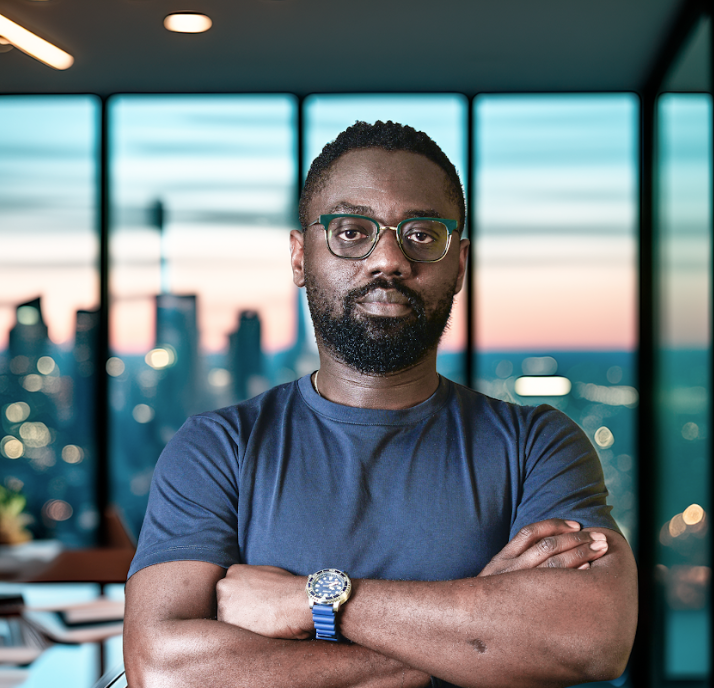
From working directly with patients in healthcare, to scaling a payments platform to millions of users across Africa, to rebuilding his career after immigrating to Canada, Boma's path is anything but linear. In this edition of Product Star Spotlight, we sit down with the Global Director of Product Management at HelloFresh, Boma Tai-Osagbemi, to hear how a career defined by adaptability, systems thinking, and a refusal to let titles define the work eventually led him here, and what he's learned along the way.
--
1. First things first: HelloFresh is a food subscription / meal delivery kit product. Where does Product Management fit in that context?
At HelloFresh, the end product a customer receives isn't a piece of software. It's a box of food arriving at their doorstep.
Behind that simple experience sits a complex network of systems, decisions, and operational processes. That's where product management lives.
I work in the operations and supply chain space, focusing on the systems that enable millions of customers to receive the right box, at the right time, with the right ingredients.
Across HelloFresh, product management spans both customer-facing experiences and the operational platforms that power them. Customers interact with our websites, mobile apps, recommendations, and menu experiences. Behind the scenes, product teams are building forecasting, optimization, workforce planning, and decision-support systems that make those experiences possible.
What I enjoy most is that the impact is tangible. In many software businesses, a mistake might create a bug or a poor user experience. In our world, it can mean someone doesn't get dinner.
The connection between product decisions and real-world outcomes is immediate, and that's what makes the work so rewarding.
2. Could you tell us what you're currently working on? What kinds of problems and solutions are you most focused on right now?
Right now I'm focused on building intelligent tools that help our operational teams make faster and better decisions.
We work with large and increasingly complex operational datasets, and a big part of my role is identifying opportunities where data, automation, and AI can create meaningful business value. That could mean detecting issues before they impact customers, improving forecasting accuracy, identifying operational inefficiencies, or helping teams make decisions in minutes rather than hours.
What makes these problems interesting is that every improvement has a direct business impact. Better decisions translate into better customer experiences, lower costs, and stronger margins.
A significant area of focus for me is understanding where AI genuinely creates value. We're past the stage where simply saying "AI" is enough. The real question is where it can improve decision-making, increase productivity, and unlock outcomes that weren't previously possible.
That question eventually became PMPlaybook.ai.
I built it because I kept watching smart PMs waste time evaluating tools that weren't worth evaluating. The signal-to-noise ratio in AI tooling is genuinely bad right now, and most product managers don't have time to figure out what's actually useful.
Today, PMPlaybook.ai is both a weekly newsletter and an AI enablement platform for product managers. It helps PMs identify the right tools for specific problems through vetted workflows, practical prompts, benchmarks, and a growing community sharing what actually works in the real world.
It's grown to more than 1,600 subscribers and has become a place where PMs compare notes on what actually works with AI in practice.
I apply the same filter there that I apply at HelloFresh: does this actually change a decision, or does it just look impressive?
3. Your path into product spans three countries and a handful of very different industries: pharma, fintech, food tech. Where did it all begin? What's Boma's "origin story," and what was the first "I'm officially in Product Management" moment?
My journey started in healthcare, working directly with patients. That experience taught me something I still carry with me today: asking the right questions is often more important than having the right answers.
From there I moved into consumer healthcare at GSK. That became my product management crucible.
In consumer goods, you're effectively responsible for the business, not just the product. You think about growth, pricing, distribution, positioning, market share, and customer behavior. It taught me to think about products as businesses rather than collections of features.
After GSK came fintech, startups, immigration to Canada, and eventually HelloFresh. The industries changed, but the underlying discipline didn't.
What's remained consistent is a curiosity for new problem spaces. Once I understand one system, I'm usually drawn to the next challenge.
At the heart of it all, I've always loved solving problems. It's like being handed a new Rubik's Cube every day.
4. Was there a specific project or moment where you thought, "This is exactly the work I want to be doing"? What made it land that way?
A few years ago, I was working on a side project designed to help bridge the supply-demand gap for medications in underserved rural communities. These were medicines that were often too expensive or specialized for local pharmacies to keep in stock, leaving patients with very limited options.
I bootstrapped the project from the ground up.
I still remember the day we launched. I was sitting at lunch when the first transaction came through.
Up until then, everything had existed as an idea, a hypothesis, or a plan. Suddenly there was a real person using something we'd built to solve a real problem.
That was the moment it clicked.
I realized I wasn't just interested in strategy or technology. I was interested in building. Taking an idea from concept to reality and seeing it create value in the world.
There's something incredibly rewarding about watching a solution move from a whiteboard discussion into the hands of someone who genuinely benefits from it.
That experience also taught me an important lesson: technology itself isn't the reward. Creating meaningful value for people is. Technology is simply one of the tools we use to get there.
5. What key moments, decisions, events and/or people shifted your direction and career path?
The biggest inflection point in my career was being accepted into the GSK Management Trainee Program.
It exposed me to sales, supply chain, manufacturing, marketing, product development, communications, and quality. More importantly, it gave me an early systems view of how businesses actually operate.
That experience taught me that most organizational challenges aren't caused by capability gaps. They're usually the result of incentives, communication breakdowns, or teams optimizing for different outcomes.
Understanding those dynamics has shaped how I lead ever since. In large organizations, the ability to align functions around a shared outcome is often more valuable than deep expertise in any single discipline.
6. You built a senior product career in Africa, then moved to Canada and started over in a different kind of role. What did that re-entry look like, and what barriers did you run into that you hadn't expected?
Harder than I usually describe it.
The standard barrier was familiar: you need Canadian experience to get a Canadian job. What I eventually figured out was that "Canadian experience" was mostly shorthand for cultural fluency, not capability. It was about knowing the communication norms, the unspoken expectations, the way decisions actually get made.
Once I understood that, I treated it like a product problem. I learned. I observed. I asked a lot of questions.
My first Canadian role wasn't product management. I had interviewed for a PM position and the hiring leader called me afterward: "I think you'd be a better fit for something closer to the technology." It was a solution engineering role at a supply chain company.
I said yes. That decision probably accelerated my career more than holding out for the right title would have.
But here's the harder part I don't always say out loud: I was regularly asked to prove things that wouldn't have been questioned in someone with a local background. I remember interviewing with a payments company and walking through my experience building systems that let people withdraw cash from ATMs and send money by text message. Some of that work predated what they were building.
The questions I got weren't consistent with that record.
The lesson I took wasn't bitterness. It was to demonstrate value wherever the door opens, and to stay detached from titles. But I'd be misrepresenting the experience if I left that part out.
7. Having worked across such different markets and cultures, do you think about users or problems differently than PMs who've built their careers in a single context? What unique instincts, skills, and perspectives has your journey given you?
The biggest advantage is pattern recognition across domains.
Working across healthcare, consumer goods, fintech, supply chain, and food technology has given me multiple lenses for evaluating problems.
When I assess a product decision, I naturally think about second and third-order effects. How does this affect operations? Customer support? Suppliers? What unintended consequence appears six months later?
I've also found that many problems are surprisingly universal. Lessons from one industry often transfer well into another.
The result is a broader toolkit. When my team hits a wall, I can often draw a parallel from a completely different domain and use it to frame new options.
8. Let's get specific: What does your role as Global Director of Product Management at HelloFresh actually involve on a day-to-day basis? And is there anything you spend material time and energy on that people might not expect?
My job is to ensure we're solving the highest-leverage operational problems across a global network.
HelloFresh serves millions of customers across multiple markets, and behind every delivery is a network of fulfillment centers, suppliers, operational teams, and technology systems that all need to work together seamlessly. My teams focus on the systems that help that network operate efficiently and make better decisions.
In a global organization there are always more good ideas than there is capacity to execute them. A significant part of my role is prioritization: aligning stakeholders, shaping direction, defining success metrics, and helping teams make decisions under uncertainty.
Most of the role isn't making product decisions. It's creating clarity. Getting people to a shared understanding of what matters most and why.
The part that surprises people is how operational the work gets. Because I sit in the supply chain space, I spend real time understanding what's actually happening on the ground. The best forecasting model in the world is only useful if it reflects operational reality.
Labor forecasting is a good example. You can build a model that predicts next week's staffing with high accuracy. Then attendance drops after a major sporting event.
The data sees an anomaly. The operators see completely predictable human behavior.
That's why proximity to users and operators matters so much. Great products are built at the intersection of data and reality.
More recently I've spent a lot of time on how AI can amplify decision-making across the organization. Not replacing judgment. Sharpening it.
9. What does the day-to-day look like for the PMs on your team?
Ideally, they're making decisions, not waiting for them.
I hire for judgment and give people real ownership. If you've explained the context, aligned on outcomes, and staffed the work correctly, you should be able to get out of the way. My job is to create the conditions for good decisions, not make every decision myself.
One of the most rewarding parts of leadership is watching someone grow into responsibilities they weren't initially sure they could handle.
As leaders, we're often tempted to solve problems ourselves because it's faster. Long-term value comes from developing judgment in others. I'd rather spend time helping someone learn how to make a difficult decision than become the bottleneck for every important one.
The best product organizations aren't built around a few smart people. They're built around teams that consistently make good decisions without needing permission.
What I push on is the quality of the questions people ask, not the volume of output. Output is downstream of questions. Get the question wrong and you'll build something correct but useless.
As AI takes on more of the administrative work, I'd rather my PMs spend their time with engineers, operators, and customers understanding what's actually happening. That's where the highest-leverage insights come from.
10. What's a product, initiative, or decision from your career that you're especially proud of? Walk us through what it was, why it mattered, and what impact it had.
One project that stands out was my work on QuickTeller, a web-based payments platform. At the time, the business had experienced years of strong growth, but that growth was beginning to slow. The question leadership posed was straightforward: where does the next phase of growth come from?
I was given the opportunity to investigate. We started by diving deeply into customer behavior and transaction patterns. Rather than immediately jumping to solutions, we focused on understanding how customers were already interacting with the platform and where unmet needs existed. One opportunity quickly emerged: travel. People needed a convenient way to book airline tickets, and we already had a trusted payments platform with significant reach. The obvious approach would have been to build a booking platform ourselves. Instead, we pursued partnerships.
We identified organizations with existing capabilities, negotiatedcommercial agreements, and integrated their services through APIs. The result was a flight-booking capability layered onto our existing platform. From a business perspective, the economics were transformative. The margins generated from travel bookings were dramatically higher than traditional payment transactions. But the more important outcome was strategic.
Historically, customers visited the platform primarily because they had to pay a bill. We created a reason for them to return because they wanted to. We shifted the platform from being a utility into becoming a destination. That project reinforced a lesson I've carried throughout my career: sometimes growth doesn't come from building more. Sometimes it comes from understanding where your existing strengths can create new forms of value.
11. How do you approach problem-solving as a Product professional? Are there specific frameworks, habits, or ways of thinking you keep coming back to? Has that changed over time? If so, why?
Five Whys, used honestly.
The word "honestly" matters. Most people do two whys, convince themselves they've found the root cause, and start building. I've been in rooms where we solved the same problem three times because no one wanted to keep asking uncomfortable questions.
I've also become increasingly skeptical of solutions that arrive too quickly. In product, the first answer is often the obvious answer, and the obvious answer is frequently wrong. If a problem seems simple, it's usually because I don't understand it well enough yet.
The other thing I've learned is that most interesting problems aren't actually isolated problems. They're symptoms of a system behaving exactly as designed, just not in the way anyone intended. If you solve the symptom, the system often finds a new expression for the same underlying issue.
That's why I start with the system before I start with the solution. What are the incentives? Where does information break down? Who optimizes for what?
The consumer packaged goods background still shapes this. In CPG you're responsible for the whole product system: pricing, distribution, customer behavior, competitive context. You can't just think about the feature. You have to think about what happens after the feature ships, who it affects, what they'll do differently, and what that does to everything else.
That second-order thinking is a habit I'd recommend to any PM. "What happens next?" is usually more useful than "What do we build?"
On AI specifically, I've stopped asking "where can we use AI?" and started asking "what decisions are we making badly, and would better or faster information change them?"
12. What would you tell someone in Toronto right now who's trying to break into product, especially if they're coming from a non-tech background or building their career here as a newcomer?
Embrace the scenic route.
There's no single path into product, and many of the strongest product leaders I know started somewhere else.
Four things matter.
First, understand technology. You don't need to become an engineer, but you should understand how software gets built and how systems interact.
Second, develop domain expertise. As AI automates more routine work, deep understanding of an industry becomes increasingly valuable.
Third, get close to a business you find interesting. It's often easier to move into product from within an organization than from outside it.
Finally, show how you think. Build things, write, share ideas, and analyze products publicly.
For newcomers especially, don't get attached to titles. Some of the best opportunities in my career came from roles that weren't part of the original plan. Focus on learning, impact, and proximity to interesting problems.
13. How do you see product management evolving over the next few years, especially with AI reshaping how teams work and what PMs are expected to do? What should people be thinking about now to stand out and stay ahead?
The easy answer is that AI handles the busywork so PMs can focus on strategy. True, but incomplete.
The more accurate version is that AI is collapsing the cost of execution. Research, synthesis, documentation, analysis, and requirements writing are all becoming cheaper and faster.
The easiest way to waste money right now is to sprinkle AI onto broken processes and hope for a miracle. The organizations creating real value are starting with decisions, workflows, and outcomes, then figuring out where AI can meaningfully improve them.
That changes what a PM is for.
When execution becomes cheaper, judgment becomes more valuable. The PMs who matter in five years will be the ones who can understand what's actually happening inside an organization, identify the right problems to solve, make decisions under uncertainty, and align people around a shared direction.
That's not a prediction about a distant future. It's already happening.
What I tell people is simple: learn to work with AI tools for real, not just conceptually. Then pay attention to where you still create value that the tool doesn't. That intersection is where your career lives.
The tooling will keep changing. The underlying job, identifying real problems, building useful things, and making good decisions with incomplete information, isn't going anywhere.
Mentorship program and in-person event experiences are at an extra cost.
Join for free!Join the TPMA Slack Community with 1000+ members
Free Virtual TPMA events for the entire TPMA Season
Become the first to know about in-person events and networking opportunities
What does it take to build a product career across three continents, multiple industries, and one of the world's largest food-tech companies?
From working directly with patients in healthcare, to scaling a payments platform to millions of users across Africa, to rebuilding his career after immigrating to Canada, Boma's path is anything but linear. In this edition of Product Star Spotlight, we sit down with the Global Director of Product Management at HelloFresh, Boma Tai-Osagbemi, to hear how a career defined by adaptability, systems thinking, and a refusal to let titles define the work eventually led him here, and what he's learned along the way.
--
1. First things first: HelloFresh is a food subscription / meal delivery kit product. Where does Product Management fit in that context?
At HelloFresh, the end product a customer receives isn't a piece of software. It's a box of food arriving at their doorstep.
Behind that simple experience sits a complex network of systems, decisions, and operational processes. That's where product management lives.
I work in the operations and supply chain space, focusing on the systems that enable millions of customers to receive the right box, at the right time, with the right ingredients.
Across HelloFresh, product management spans both customer-facing experiences and the operational platforms that power them. Customers interact with our websites, mobile apps, recommendations, and menu experiences. Behind the scenes, product teams are building forecasting, optimization, workforce planning, and decision-support systems that make those experiences possible.
What I enjoy most is that the impact is tangible. In many software businesses, a mistake might create a bug or a poor user experience. In our world, it can mean someone doesn't get dinner.
The connection between product decisions and real-world outcomes is immediate, and that's what makes the work so rewarding.
2. Could you tell us what you're currently working on? What kinds of problems and solutions are you most focused on right now?
Right now I'm focused on building intelligent tools that help our operational teams make faster and better decisions.
We work with large and increasingly complex operational datasets, and a big part of my role is identifying opportunities where data, automation, and AI can create meaningful business value. That could mean detecting issues before they impact customers, improving forecasting accuracy, identifying operational inefficiencies, or helping teams make decisions in minutes rather than hours.
What makes these problems interesting is that every improvement has a direct business impact. Better decisions translate into better customer experiences, lower costs, and stronger margins.
A significant area of focus for me is understanding where AI genuinely creates value. We're past the stage where simply saying "AI" is enough. The real question is where it can improve decision-making, increase productivity, and unlock outcomes that weren't previously possible.
That question eventually became PMPlaybook.ai.
I built it because I kept watching smart PMs waste time evaluating tools that weren't worth evaluating. The signal-to-noise ratio in AI tooling is genuinely bad right now, and most product managers don't have time to figure out what's actually useful.
Today, PMPlaybook.ai is both a weekly newsletter and an AI enablement platform for product managers. It helps PMs identify the right tools for specific problems through vetted workflows, practical prompts, benchmarks, and a growing community sharing what actually works in the real world.
It's grown to more than 1,600 subscribers and has become a place where PMs compare notes on what actually works with AI in practice.
I apply the same filter there that I apply at HelloFresh: does this actually change a decision, or does it just look impressive?
3. Your path into product spans three countries and a handful of very different industries: pharma, fintech, food tech. Where did it all begin? What's Boma's "origin story," and what was the first "I'm officially in Product Management" moment?
My journey started in healthcare, working directly with patients. That experience taught me something I still carry with me today: asking the right questions is often more important than having the right answers.
From there I moved into consumer healthcare at GSK. That became my product management crucible.
In consumer goods, you're effectively responsible for the business, not just the product. You think about growth, pricing, distribution, positioning, market share, and customer behavior. It taught me to think about products as businesses rather than collections of features.
After GSK came fintech, startups, immigration to Canada, and eventually HelloFresh. The industries changed, but the underlying discipline didn't.
What's remained consistent is a curiosity for new problem spaces. Once I understand one system, I'm usually drawn to the next challenge.
At the heart of it all, I've always loved solving problems. It's like being handed a new Rubik's Cube every day.
4. Was there a specific project or moment where you thought, "This is exactly the work I want to be doing"? What made it land that way?
A few years ago, I was working on a side project designed to help bridge the supply-demand gap for medications in underserved rural communities. These were medicines that were often too expensive or specialized for local pharmacies to keep in stock, leaving patients with very limited options.
I bootstrapped the project from the ground up.
I still remember the day we launched. I was sitting at lunch when the first transaction came through.
Up until then, everything had existed as an idea, a hypothesis, or a plan. Suddenly there was a real person using something we'd built to solve a real problem.
That was the moment it clicked.
I realized I wasn't just interested in strategy or technology. I was interested in building. Taking an idea from concept to reality and seeing it create value in the world.
There's something incredibly rewarding about watching a solution move from a whiteboard discussion into the hands of someone who genuinely benefits from it.
That experience also taught me an important lesson: technology itself isn't the reward. Creating meaningful value for people is. Technology is simply one of the tools we use to get there.
5. What key moments, decisions, events and/or people shifted your direction and career path?
The biggest inflection point in my career was being accepted into the GSK Management Trainee Program.
It exposed me to sales, supply chain, manufacturing, marketing, product development, communications, and quality. More importantly, it gave me an early systems view of how businesses actually operate.
That experience taught me that most organizational challenges aren't caused by capability gaps. They're usually the result of incentives, communication breakdowns, or teams optimizing for different outcomes.
Understanding those dynamics has shaped how I lead ever since. In large organizations, the ability to align functions around a shared outcome is often more valuable than deep expertise in any single discipline.
6. You built a senior product career in Africa, then moved to Canada and started over in a different kind of role. What did that re-entry look like, and what barriers did you run into that you hadn't expected?
Harder than I usually describe it.
The standard barrier was familiar: you need Canadian experience to get a Canadian job. What I eventually figured out was that "Canadian experience" was mostly shorthand for cultural fluency, not capability. It was about knowing the communication norms, the unspoken expectations, the way decisions actually get made.
Once I understood that, I treated it like a product problem. I learned. I observed. I asked a lot of questions.
My first Canadian role wasn't product management. I had interviewed for a PM position and the hiring leader called me afterward: "I think you'd be a better fit for something closer to the technology." It was a solution engineering role at a supply chain company.
I said yes. That decision probably accelerated my career more than holding out for the right title would have.
But here's the harder part I don't always say out loud: I was regularly asked to prove things that wouldn't have been questioned in someone with a local background. I remember interviewing with a payments company and walking through my experience building systems that let people withdraw cash from ATMs and send money by text message. Some of that work predated what they were building.
The questions I got weren't consistent with that record.
The lesson I took wasn't bitterness. It was to demonstrate value wherever the door opens, and to stay detached from titles. But I'd be misrepresenting the experience if I left that part out.
7. Having worked across such different markets and cultures, do you think about users or problems differently than PMs who've built their careers in a single context? What unique instincts, skills, and perspectives has your journey given you?
The biggest advantage is pattern recognition across domains.
Working across healthcare, consumer goods, fintech, supply chain, and food technology has given me multiple lenses for evaluating problems.
When I assess a product decision, I naturally think about second and third-order effects. How does this affect operations? Customer support? Suppliers? What unintended consequence appears six months later?
I've also found that many problems are surprisingly universal. Lessons from one industry often transfer well into another.
The result is a broader toolkit. When my team hits a wall, I can often draw a parallel from a completely different domain and use it to frame new options.
8. Let's get specific: What does your role as Global Director of Product Management at HelloFresh actually involve on a day-to-day basis? And is there anything you spend material time and energy on that people might not expect?
My job is to ensure we're solving the highest-leverage operational problems across a global network.
HelloFresh serves millions of customers across multiple markets, and behind every delivery is a network of fulfillment centers, suppliers, operational teams, and technology systems that all need to work together seamlessly. My teams focus on the systems that help that network operate efficiently and make better decisions.
In a global organization there are always more good ideas than there is capacity to execute them. A significant part of my role is prioritization: aligning stakeholders, shaping direction, defining success metrics, and helping teams make decisions under uncertainty.
Most of the role isn't making product decisions. It's creating clarity. Getting people to a shared understanding of what matters most and why.
The part that surprises people is how operational the work gets. Because I sit in the supply chain space, I spend real time understanding what's actually happening on the ground. The best forecasting model in the world is only useful if it reflects operational reality.
Labor forecasting is a good example. You can build a model that predicts next week's staffing with high accuracy. Then attendance drops after a major sporting event.
The data sees an anomaly. The operators see completely predictable human behavior.
That's why proximity to users and operators matters so much. Great products are built at the intersection of data and reality.
More recently I've spent a lot of time on how AI can amplify decision-making across the organization. Not replacing judgment. Sharpening it.
9. What does the day-to-day look like for the PMs on your team?
Ideally, they're making decisions, not waiting for them.
I hire for judgment and give people real ownership. If you've explained the context, aligned on outcomes, and staffed the work correctly, you should be able to get out of the way. My job is to create the conditions for good decisions, not make every decision myself.
One of the most rewarding parts of leadership is watching someone grow into responsibilities they weren't initially sure they could handle.
As leaders, we're often tempted to solve problems ourselves because it's faster. Long-term value comes from developing judgment in others. I'd rather spend time helping someone learn how to make a difficult decision than become the bottleneck for every important one.
The best product organizations aren't built around a few smart people. They're built around teams that consistently make good decisions without needing permission.
What I push on is the quality of the questions people ask, not the volume of output. Output is downstream of questions. Get the question wrong and you'll build something correct but useless.
As AI takes on more of the administrative work, I'd rather my PMs spend their time with engineers, operators, and customers understanding what's actually happening. That's where the highest-leverage insights come from.
10. What's a product, initiative, or decision from your career that you're especially proud of? Walk us through what it was, why it mattered, and what impact it had.
One project that stands out was my work on QuickTeller, a web-based payments platform. At the time, the business had experienced years of strong growth, but that growth was beginning to slow. The question leadership posed was straightforward: where does the next phase of growth come from?
I was given the opportunity to investigate. We started by diving deeply into customer behavior and transaction patterns. Rather than immediately jumping to solutions, we focused on understanding how customers were already interacting with the platform and where unmet needs existed. One opportunity quickly emerged: travel. People needed a convenient way to book airline tickets, and we already had a trusted payments platform with significant reach. The obvious approach would have been to build a booking platform ourselves. Instead, we pursued partnerships.
We identified organizations with existing capabilities, negotiatedcommercial agreements, and integrated their services through APIs. The result was a flight-booking capability layered onto our existing platform. From a business perspective, the economics were transformative. The margins generated from travel bookings were dramatically higher than traditional payment transactions. But the more important outcome was strategic.
Historically, customers visited the platform primarily because they had to pay a bill. We created a reason for them to return because they wanted to. We shifted the platform from being a utility into becoming a destination. That project reinforced a lesson I've carried throughout my career: sometimes growth doesn't come from building more. Sometimes it comes from understanding where your existing strengths can create new forms of value.
11. How do you approach problem-solving as a Product professional? Are there specific frameworks, habits, or ways of thinking you keep coming back to? Has that changed over time? If so, why?
Five Whys, used honestly.
The word "honestly" matters. Most people do two whys, convince themselves they've found the root cause, and start building. I've been in rooms where we solved the same problem three times because no one wanted to keep asking uncomfortable questions.
I've also become increasingly skeptical of solutions that arrive too quickly. In product, the first answer is often the obvious answer, and the obvious answer is frequently wrong. If a problem seems simple, it's usually because I don't understand it well enough yet.
The other thing I've learned is that most interesting problems aren't actually isolated problems. They're symptoms of a system behaving exactly as designed, just not in the way anyone intended. If you solve the symptom, the system often finds a new expression for the same underlying issue.
That's why I start with the system before I start with the solution. What are the incentives? Where does information break down? Who optimizes for what?
The consumer packaged goods background still shapes this. In CPG you're responsible for the whole product system: pricing, distribution, customer behavior, competitive context. You can't just think about the feature. You have to think about what happens after the feature ships, who it affects, what they'll do differently, and what that does to everything else.
That second-order thinking is a habit I'd recommend to any PM. "What happens next?" is usually more useful than "What do we build?"
On AI specifically, I've stopped asking "where can we use AI?" and started asking "what decisions are we making badly, and would better or faster information change them?"
12. What would you tell someone in Toronto right now who's trying to break into product, especially if they're coming from a non-tech background or building their career here as a newcomer?
Embrace the scenic route.
There's no single path into product, and many of the strongest product leaders I know started somewhere else.
Four things matter.
First, understand technology. You don't need to become an engineer, but you should understand how software gets built and how systems interact.
Second, develop domain expertise. As AI automates more routine work, deep understanding of an industry becomes increasingly valuable.
Third, get close to a business you find interesting. It's often easier to move into product from within an organization than from outside it.
Finally, show how you think. Build things, write, share ideas, and analyze products publicly.
For newcomers especially, don't get attached to titles. Some of the best opportunities in my career came from roles that weren't part of the original plan. Focus on learning, impact, and proximity to interesting problems.
13. How do you see product management evolving over the next few years, especially with AI reshaping how teams work and what PMs are expected to do? What should people be thinking about now to stand out and stay ahead?
The easy answer is that AI handles the busywork so PMs can focus on strategy. True, but incomplete.
The more accurate version is that AI is collapsing the cost of execution. Research, synthesis, documentation, analysis, and requirements writing are all becoming cheaper and faster.
The easiest way to waste money right now is to sprinkle AI onto broken processes and hope for a miracle. The organizations creating real value are starting with decisions, workflows, and outcomes, then figuring out where AI can meaningfully improve them.
That changes what a PM is for.
When execution becomes cheaper, judgment becomes more valuable. The PMs who matter in five years will be the ones who can understand what's actually happening inside an organization, identify the right problems to solve, make decisions under uncertainty, and align people around a shared direction.
That's not a prediction about a distant future. It's already happening.
What I tell people is simple: learn to work with AI tools for real, not just conceptually. Then pay attention to where you still create value that the tool doesn't. That intersection is where your career lives.
The tooling will keep changing. The underlying job, identifying real problems, building useful things, and making good decisions with incomplete information, isn't going anywhere.
Toronto Product Management Association (TPMA) is a community focused on development, growth and networking of Product professionals in the Greater Toronto Area.

.png)