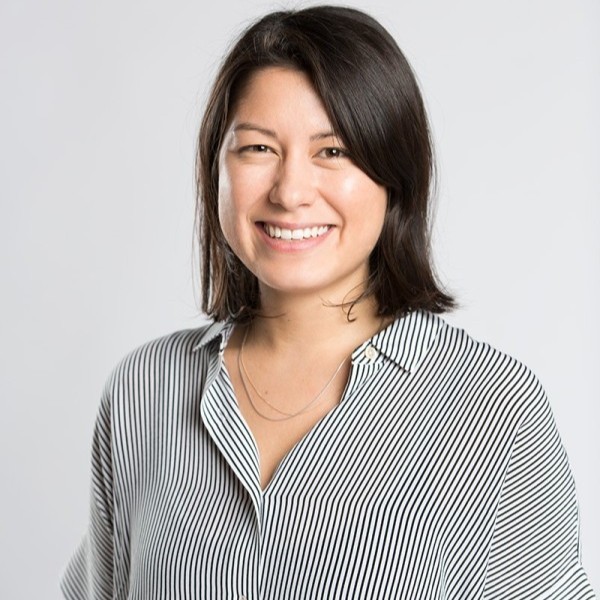
Jacqueline Matsui, Product Manager at Bell Media, sat down with me to share the unconventional journey that led her into product; a path that began not in tech, but in Diaspora Studies at the University of Toronto and hands-on work with NGO’s in India. Today, she helps shape how millions of viewers discover content across platforms like Crave and TSN through large-scale personalization systems. Her story stands out for one simple reason: she didn’t plan to become a product manager — she discovered the role by following a curiosity for how technology shapes human behavior.
My name is Jacqueline Matsui. I have been a Product Manager for over 8 years.
Right now, I am a Product Manager at Bell Media working on the personalization portfolio. That means I focus on content recommendations across our major brands including Crave, TSN, and soon, hopefully, news.
At a high level, my role is about bridging business needs and technical execution. Bell is a large organization with many stakeholders and business units, so a big part of my day-to-day is aligning diverse teams around a clarified vision. I work to ensure that what we’re building makes sense for the user, aligns with business goals, and is technically feasible.
My path was unconventional.
I studied Diaspora and Transnational Studies at the University of Toronto. When I graduated, I wasn’t sure what direction I wanted to go in. I took time to travel to India and worked with NGOs. While there, I managed communication tools for the NGO’s blogs and CMS platforms, with basic HTML and CSS. I started pulling data sources together and managing workflows. That’s when I got the technology bug.
When I returned to Canada, I worked in social media management for unions in the GTA. I loved experimenting with posting tools, cross-channel promotion, and analytics. It wasn’t just marketing, I was fascinated by how platforms worked.
Where things shifted…
I then moved into an events agency. We initially relied on WordPress templates for client’s event sites, but we needed more customized tools like registration systems, database management, communication management, itinerary tracking, etc. We started to build our own in-house product suite and that’s when I started writing product requirements docs, conducting user research, competitor analysis, and working directly with developers. I didn’t even know I was “doing product”... I just knew I loved defining problems and building systems. Over time, that work became more formalized. By the time I left, my title was Digital Product Director. I had grown the product function from just myself to a team of six developers, two PMs, and one designer.
From there, I took General Assembly and BrainStation courses to formalize my knowledge, and eventually transitioned into Bell Media, where I’ve been working on complex personalization and infrastructure systems for over four years.
No — I didn’t even know it was a profession at first.
It wasn’t something I set out to become. I kind of backed into it by following what interested me: systems, tools, workflow, and how technology shapes behavior.
Once I realized that product management was the intersection of: strategy, technology, user empathy, and communication. It clicked. It aligns deeply with my personality. I like creating structure in messy environments. I like aligning people. I like making ideas tangible.
So it wasn’t the original goal but it became the right fit.
The hardest part was realizing there is no single “correct” way to do product.
There are countless frameworks. Different PMs operate differently. Different companies expect different styles. It can be difficult to know whether you’re using the “right” approach.
I constantly ask myself:
Breaking into product, required adopting a learner mindset permanently. You have to be adaptable. You have to be willing to throw out processes that no longer work. And sometimes that’s uncomfortable, especially when you get attached to a certain style. The real shift was understanding that the product isn’t static. It evolves. And you have to evolve with it.
I didn’t have one big “aha” moment, it was gradual.
But I remember launching our first fully internal event website, not just adapted from a template, but built with our own custom infrastructure, database and feature sets.
That was the first time I thought: “Okay. I’m actually doing product management.”
I’m a big proponent of asking why.
When a problem arises, I break it down:
Why is engagement down? Because fewer users click containers.
Why? Because containers feel repetitive.
Why? etc.
It forces clarity.
Beyond frameworks, I think deeply about trade-offs. Especially in personalization, the ecosystem is interconnected. A decision on one surface impacts another. So I try to zoom out before zooming in.
I also think modern PM problem-solving has changed. With AI tools, we can move at warp speed. Documentation is faster. Analysis is faster. What matters now is precision of thinking and clarity of communication. It is right to identify a problem but it is equally important how you communicate when there is a problem, own the messaging and detail what is going to happen next.
Launching and expanding Crave’s recommendation engine.
Originally, we had a basic single-row recommendation. Over time, we scaled it into full personalized page layouts and extended it across touchpoints — email, SMS, and other channels. It was an important infrastructure shift.
I came into Bell Media to lead the personalization program, so this was a core focus from the start. While the program was ramping up, I briefly supported some ad tech implementations, but very quickly shifted into building out personalization as a long-term capability.
Of course, this work doesn’t happen in isolation. It involves close collaboration with UX/UI designers, other product managers, client development teams, executives, and stakeholder groups across content and marketing. I also worked closely with a Senior Product Manager who leads the data and analytics infrastructure across Bell Media, while I run the personalization portfolio. Together, we defined the strategy and direction for the program.
Today, Crave’s personalization and recommendation system delivers tailored content experiences to over 4 million subscribers, and the scale of that impact along with the complexity of the infrastructure powering it is something I’m deeply proud of.
Machine learning models and vibe coding have fundamentally changed the game. These tools have removed many of the traditional barriers to experimentation. You can prototype, test, and explore ideas faster and more hands-on than ever before. Take advantage of that. The fastest way to learn about what will work and won’t work is by building it.
You only truly learn by doing.
At the same time, invest in your communication skills. Being able to clearly articulate context, intent, and trade-offs is a superpower. Modern toolsets respond to precision and so do teams. Clear thinking shows up in clear language.
I’m also focused on refining my taste. Great product managers understand what resonates deeply with users. They know what feels intuitive, what feels elegant, and what feels cluttered. Taste develops through exposure, iteration, and feedback.
Experiment constantly. Stay curious.
I think we’re moving back toward in-person community.
COVID fragmented teams and communities. AI is creating anxiety and velocity at the same time. It’s easy to feel behind.
But these shifts are happening across all industries, not just product. The way forward is through connection.
That’s why I’m excited about initiatives like TPMA’s upcoming product conference on May 28th, 2026. We need spaces to discuss as a community.
Stay curious!
Mentorship program and in-person event experiences are at an extra cost.
Join for free!Join the TPMA Slack Community with 1000+ members
Free Virtual TPMA events for the entire TPMA Season
Become the first to know about in-person events and networking opportunities
Jacqueline Matsui, Product Manager at Bell Media, sat down with me to share the unconventional journey that led her into product; a path that began not in tech, but in Diaspora Studies at the University of Toronto and hands-on work with NGO’s in India. Today, she helps shape how millions of viewers discover content across platforms like Crave and TSN through large-scale personalization systems. Her story stands out for one simple reason: she didn’t plan to become a product manager — she discovered the role by following a curiosity for how technology shapes human behavior.
My name is Jacqueline Matsui. I have been a Product Manager for over 8 years.
Right now, I am a Product Manager at Bell Media working on the personalization portfolio. That means I focus on content recommendations across our major brands including Crave, TSN, and soon, hopefully, news.
At a high level, my role is about bridging business needs and technical execution. Bell is a large organization with many stakeholders and business units, so a big part of my day-to-day is aligning diverse teams around a clarified vision. I work to ensure that what we’re building makes sense for the user, aligns with business goals, and is technically feasible.
My path was unconventional.
I studied Diaspora and Transnational Studies at the University of Toronto. When I graduated, I wasn’t sure what direction I wanted to go in. I took time to travel to India and worked with NGOs. While there, I managed communication tools for the NGO’s blogs and CMS platforms, with basic HTML and CSS. I started pulling data sources together and managing workflows. That’s when I got the technology bug.
When I returned to Canada, I worked in social media management for unions in the GTA. I loved experimenting with posting tools, cross-channel promotion, and analytics. It wasn’t just marketing, I was fascinated by how platforms worked.
Where things shifted…
I then moved into an events agency. We initially relied on WordPress templates for client’s event sites, but we needed more customized tools like registration systems, database management, communication management, itinerary tracking, etc. We started to build our own in-house product suite and that’s when I started writing product requirements docs, conducting user research, competitor analysis, and working directly with developers. I didn’t even know I was “doing product”... I just knew I loved defining problems and building systems. Over time, that work became more formalized. By the time I left, my title was Digital Product Director. I had grown the product function from just myself to a team of six developers, two PMs, and one designer.
From there, I took General Assembly and BrainStation courses to formalize my knowledge, and eventually transitioned into Bell Media, where I’ve been working on complex personalization and infrastructure systems for over four years.
No — I didn’t even know it was a profession at first.
It wasn’t something I set out to become. I kind of backed into it by following what interested me: systems, tools, workflow, and how technology shapes behavior.
Once I realized that product management was the intersection of: strategy, technology, user empathy, and communication. It clicked. It aligns deeply with my personality. I like creating structure in messy environments. I like aligning people. I like making ideas tangible.
So it wasn’t the original goal but it became the right fit.
The hardest part was realizing there is no single “correct” way to do product.
There are countless frameworks. Different PMs operate differently. Different companies expect different styles. It can be difficult to know whether you’re using the “right” approach.
I constantly ask myself:
Breaking into product, required adopting a learner mindset permanently. You have to be adaptable. You have to be willing to throw out processes that no longer work. And sometimes that’s uncomfortable, especially when you get attached to a certain style. The real shift was understanding that the product isn’t static. It evolves. And you have to evolve with it.
I didn’t have one big “aha” moment, it was gradual.
But I remember launching our first fully internal event website, not just adapted from a template, but built with our own custom infrastructure, database and feature sets.
That was the first time I thought: “Okay. I’m actually doing product management.”
I’m a big proponent of asking why.
When a problem arises, I break it down:
Why is engagement down? Because fewer users click containers.
Why? Because containers feel repetitive.
Why? etc.
It forces clarity.
Beyond frameworks, I think deeply about trade-offs. Especially in personalization, the ecosystem is interconnected. A decision on one surface impacts another. So I try to zoom out before zooming in.
I also think modern PM problem-solving has changed. With AI tools, we can move at warp speed. Documentation is faster. Analysis is faster. What matters now is precision of thinking and clarity of communication. It is right to identify a problem but it is equally important how you communicate when there is a problem, own the messaging and detail what is going to happen next.
Launching and expanding Crave’s recommendation engine.
Originally, we had a basic single-row recommendation. Over time, we scaled it into full personalized page layouts and extended it across touchpoints — email, SMS, and other channels. It was an important infrastructure shift.
I came into Bell Media to lead the personalization program, so this was a core focus from the start. While the program was ramping up, I briefly supported some ad tech implementations, but very quickly shifted into building out personalization as a long-term capability.
Of course, this work doesn’t happen in isolation. It involves close collaboration with UX/UI designers, other product managers, client development teams, executives, and stakeholder groups across content and marketing. I also worked closely with a Senior Product Manager who leads the data and analytics infrastructure across Bell Media, while I run the personalization portfolio. Together, we defined the strategy and direction for the program.
Today, Crave’s personalization and recommendation system delivers tailored content experiences to over 4 million subscribers, and the scale of that impact along with the complexity of the infrastructure powering it is something I’m deeply proud of.
Machine learning models and vibe coding have fundamentally changed the game. These tools have removed many of the traditional barriers to experimentation. You can prototype, test, and explore ideas faster and more hands-on than ever before. Take advantage of that. The fastest way to learn about what will work and won’t work is by building it.
You only truly learn by doing.
At the same time, invest in your communication skills. Being able to clearly articulate context, intent, and trade-offs is a superpower. Modern toolsets respond to precision and so do teams. Clear thinking shows up in clear language.
I’m also focused on refining my taste. Great product managers understand what resonates deeply with users. They know what feels intuitive, what feels elegant, and what feels cluttered. Taste develops through exposure, iteration, and feedback.
Experiment constantly. Stay curious.
I think we’re moving back toward in-person community.
COVID fragmented teams and communities. AI is creating anxiety and velocity at the same time. It’s easy to feel behind.
But these shifts are happening across all industries, not just product. The way forward is through connection.
That’s why I’m excited about initiatives like TPMA’s upcoming product conference on May 28th, 2026. We need spaces to discuss as a community.
Stay curious!
Toronto Product Management Association (TPMA) is a community focused on development, growth and networking of Product professionals in the Greater Toronto Area.